
Roof Leak Repair in Washington Township
Finding the entry point first, because water travels along rafters and shows up somewhere else entirely.
Why the stain is not the leak
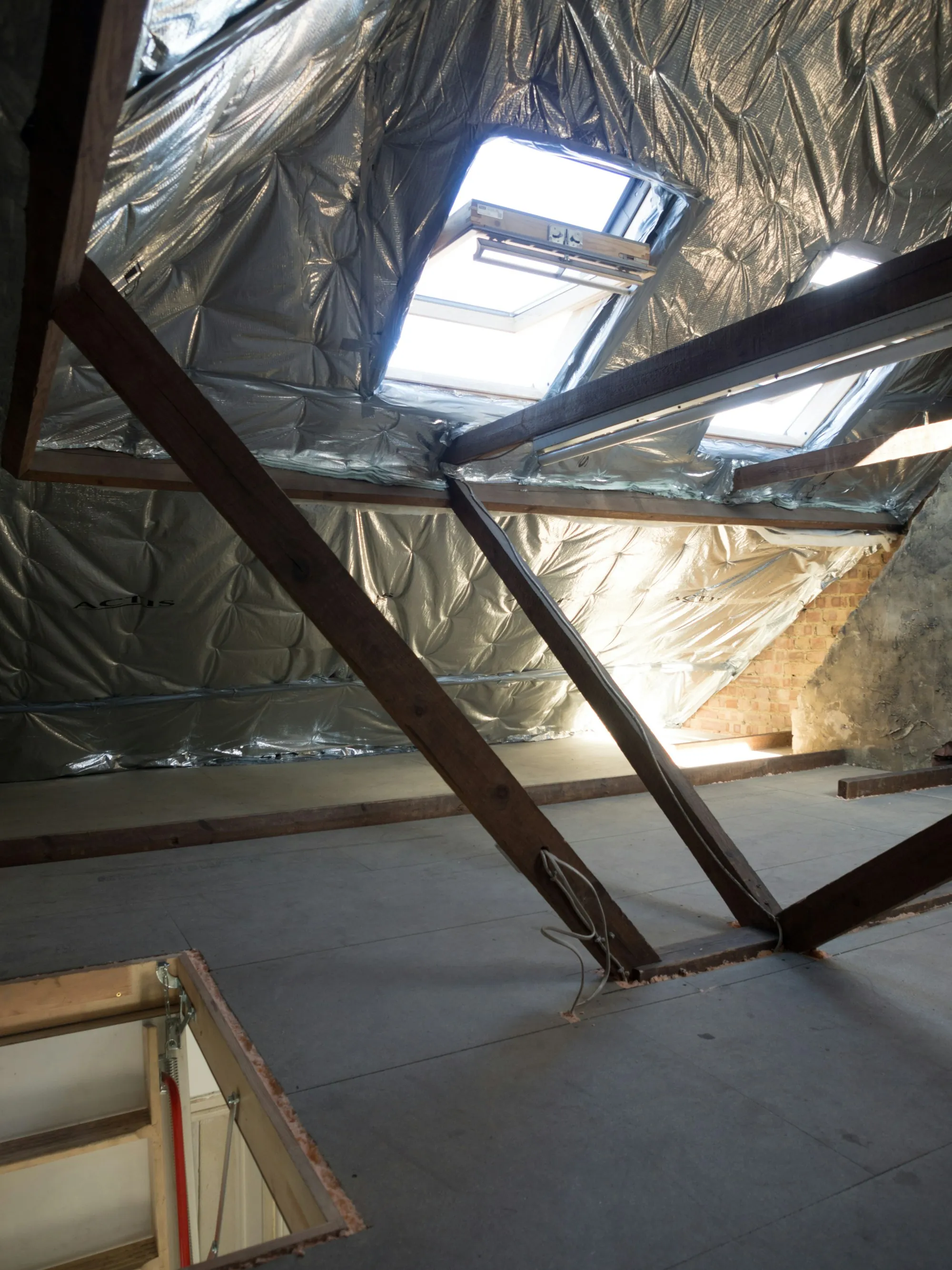
Water entering a roof does not drop straight down. It runs the underside of the sheathing, follows a rafter to its lowest point and only then finds a gap to fall through, which can put the visible mark several feet from the breach. So we begin in the attic wherever there is a hatch, work back up the track it left, and climb the slope last to confirm what we already suspect.
Where leaks here usually start
Flashing, not shingles
Most leaks we trace end at a flashing detail: a chimney, a sidewall, a skylight kerb or a dormer cheek.
Pipe boots that have split
The collar perishes years before the shingles do and leaves an open hole around the stack.
Valleys carrying too much water
Two large slopes meeting into a worn valley will eventually push water sideways under the courses.
Ice at the eaves
Meltwater refreezing at a cold eave backs up under the shingles, which is why eave protection matters in this climate.
Nail pops
A fastener that has worked loose lifts the shingle above it and opens a path straight through the deck.
Questions about this work
Can you find a leak that only shows in heavy rain?
Usually, yes. Intermittent leaks are nearly always wind-driven rain getting past a flashing detail that is watertight in a vertical downpour. We look for the staining and corrosion that mark the path rather than waiting for the right storm.
What if the leak is not the roof at all?
It happens: condensation in a poorly ventilated attic, a failed bathroom fan duct and a plumbing vent all produce roof-shaped stains. If that is what we find, we will say so and you will not be sold a roof repair you do not need.
Get the source found, not the stain painted over
Describe where the water shows and we will book a visit to trace it properly.